Anyone who has spent a summer afternoon in Titlagarh knows the heat isn't just a weather report—it’s an opponent. Often called the "hotspot" of Odisha, this town tests the limits of traditional building materials. When the mercury hits $45°C$ or $48°C$, metal sheets turn into radiators and concrete slabs start holding onto that heat long after the sun goes down.
At FV INFRA LLP, we’ve spent a lot of time on the road between Nagpur and Raipur, extending our reach into places like Titlagarh, Kesinga, and Kantabanji. We’ve seen firsthand how the local climate—a mix of punishing UV rays and those sudden, violent monsoon downpours—can make outdoor spaces feel unusable. That’s why we’ve become so passionate about bringing tensile membrane structure technology to Western Odisha.
Why Tensile Works Where Others Fail
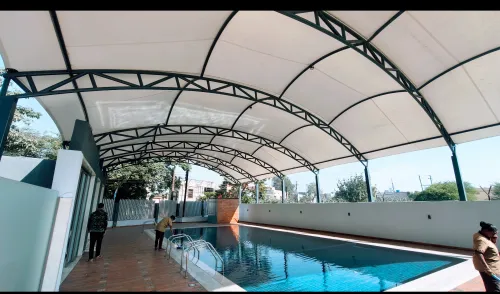
Standard roofing often feels like a compromise. You either get shade but lose the light, or you get light but end up in a greenhouse. Tensile structures change that math. By using high-strength fabrics like PVC or PTFE stretched over a slim steel skeleton, we create a weather-protected roofing Odisha solution that actually breathes.
The material doesn't just block the sun; it reflects it. It’s a bit like wearing a high-performance sports fabric instead of a heavy wool coat. Under a tensile shed, the temperature can be significantly lower than under a traditional tin roof. Plus, the translucency means you get that beautiful, soft "glow-in-the-dark" look at night when you turn on the interior lights, and diffused, natural light during the day.
The "Connected" Narrative: More Than Just a Roof
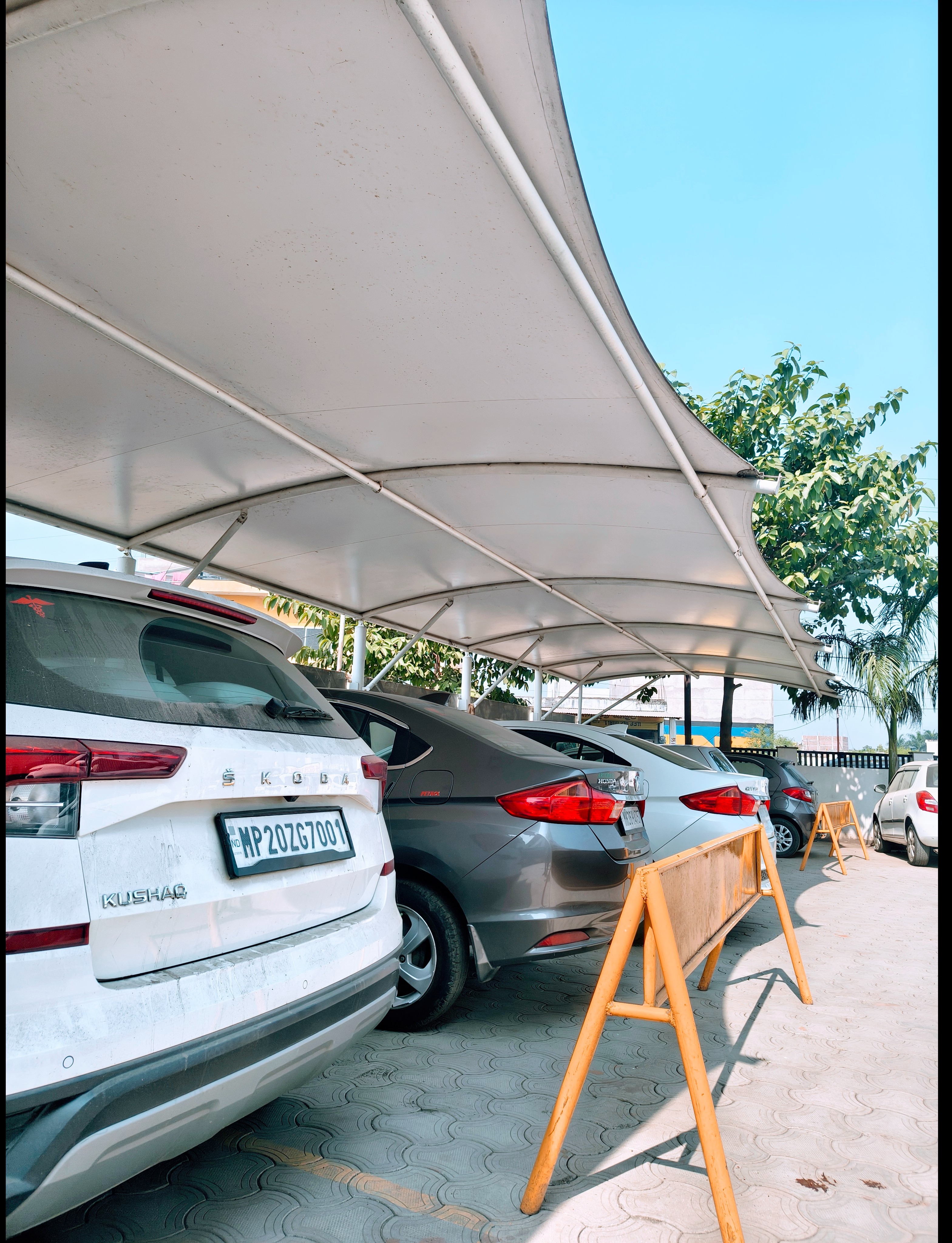
Lately, our clients in the Raipur-Nagpur belt are asking for more than just "cover." They want their spaces to be smart. We recently worked on a project where the homeowner wanted a "Connected Home" vibe. They asked, "Can I just say, 'Alexa, open the pergola'?" The answer is yes. We are now integrating motorized systems into our structures. Whether it’s a massive clear-span car park or a private terrace in Bolangir, you can have sensors that detect heavy winds and automatically adjust tension, or simple voice commands to retract sections of the fabric. It’s about making the structure work for you, not the other way around.
Our Journey Across the Region
Every site visit tells a story. Whether we’re doing a structural drawing for a stadium in Bilaspur or an inspection for a warehouse in Gadchiroli, the challenges are unique. In Titlagarh, the focus is always on wind-load capacity and heat reflection.
We handle everything from the initial 3D design to the final nut and bolt on-site. It’s a messy, rewarding process, but seeing a "dead" open space turn into a premium, year-round living area is why we do this. We’ve completed projects in:
Maharashtra: Nagpur, Amravati, Akola, Chandrapur.
Chhattisgarh: Raipur, Bhilai, Durg, Ambikapur.
Odisha: Titlagarh, Kesinga, Kantabanji.
Why We Sleep Better at Night
There’s a specific kind of stress that comes with heavy rains in Odisha. You worry about leaks, rust, or the roof rattling in the wind. Using a tensile membrane structure Titlagarh specific design means using materials that are 100% watertight and earthquake-safe. Because the fabric is so light, it doesn't need those heavy, space-consuming pillars. You get a massive, clear span that stays stable even when the monsoon is at its worst.
If you’re tired of replacing rusted sheets or dealing with a terrace that feels like an oven, let’s talk. We don't just sell sheds; we build climate-resilient spaces that last 20 to 30 years.