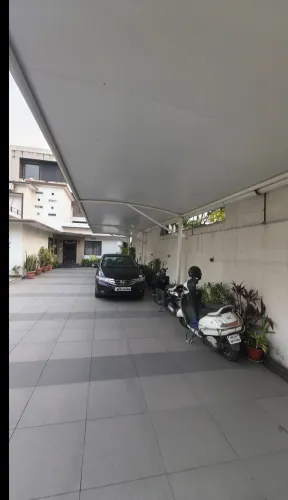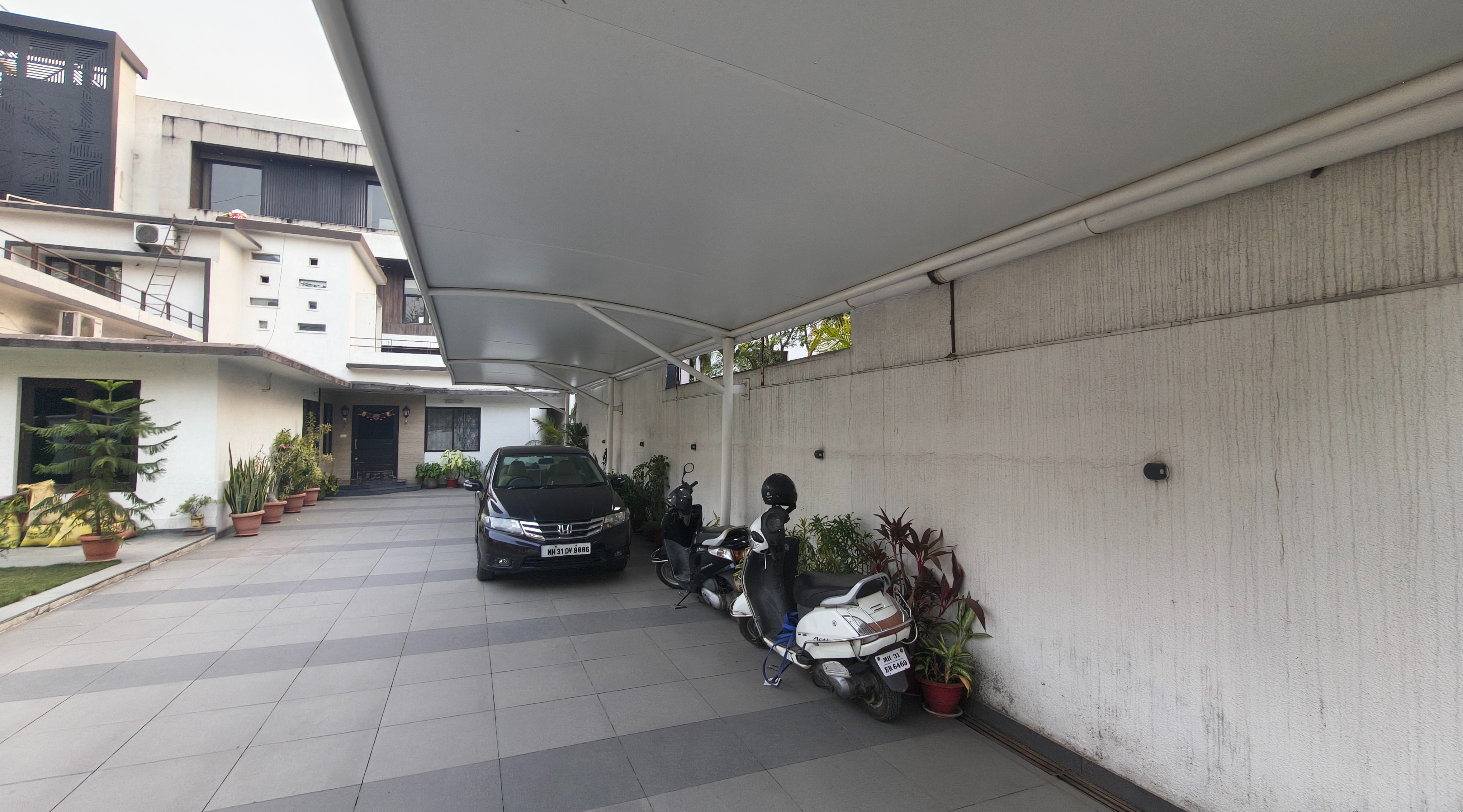
I was recently chatting with a structural engineer in Nagpur about the seismic shifts we’ve been seeing across Central India. He said something that really stuck with me: "In a tremor, weight isn't your friend; it's your enemy." It’s a simple thought, but when you look up at a massive concrete slab or a heavy steel industrial roof, it takes on a whole new meaning.
Most people choose a roof based on how it looks or how much it costs today. But at FV INFRA LLP, we spend a lot of time thinking about how a structure behaves when the ground starts to move. That is why we’ve become such big advocates for lightweight structural membrane systems. It’s not just about the modern aesthetic—it’s about the physics of safety.
The Physics of Less: Why Light is Right
Think about it this way. During an earthquake, the force exerted on a building is directly related to its mass. A heavy roof acts like a giant pendulum, swinging and putting immense stress on the pillars and the foundation.
Our tensile membranes are a fraction of the weight of traditional metal or concrete. Because they are so light, they exert significantly less force on the building’s skeleton during a tremor. It’s essentially an earthquake safe roofing India can rely on because the structure doesn't have to fight its own weight. Instead of a rigid, heavy sheet that might crack or collapse, the membrane is flexible. It’s designed to handle tension, meaning it can absorb and dissipate energy rather than resisting it until it breaks.
More Than Just a Safety Net
While the safety aspect is what allows us to sleep at night, there are some pretty great "side effects" to going lightweight:
No More Internal Pillars: Because the material is so strong under tension, we can cover massive clear-span areas.
Whether it’s a car park in Raipur or a sports complex in Jabalpur, you get a wide-open space without a forest of heavy pillars in the way. The "Cool" Factor: These advanced PVC and PTFE fabrics reflect solar heat. In the 47°C heat of Akola or Amravati, the area underneath stays naturally cooler.
Sunlight Without the Sting: The natural translucency lets in soft, diffused light.
You don't need to turn on the lights at noon, which is a nice win for the monthly bills.
A Fast-Track from Design to Installation
One project that really stands out was for a client in Bhilai. They needed a safe industrial roofing solution but couldn't afford months of downtime. Since our components are prefabricated, we did the site visit, the 3D designing, and the structural drawings beforehand. The actual on-site installation took just a few days.
We’ve taken this "dry process" to Gondia, Bhandara, and even way out in Titlagarh and Kesinga.
From Site Visit to Final Tensioning
We don't just "supply" a roof; we manage the whole journey. From Chandrapur to Gadchiroli, our teams are on the ground making sure the tension is perfect. A properly tensioned roof doesn't just look better; it’s more durable against wind and rain, lasting anywhere from 15 to 30 years.
Seeing a project go from a digital 3D model to a soaring, curved landmark in Jabalpur or Bilaspur never gets old. It’s about more than just construction; it’s about using modern materials to solve old problems.
If you’re planning a project in an area where the ground—or even just the wind—is a concern, let’s talk about how we can take the weight off your shoulders.