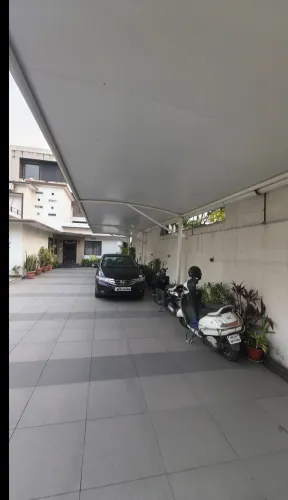
There is a specific moment during the Vidarbha summer when traditional roofing simply gives up. When the temperature touches 45°C in the industrial pockets of Chandrapur, any normal tin or metal factory roofing in Maharashtra turns into a massive heat radiator. Working under it feels less like a workspace and more like an oven. For years, the default response was either heavy, power-hungry air conditioning or just accepting that certain months of the year would be brutal.
But things are shifting. Lately, when we talk to business owners and homeowners around Nagpur, Raipur, or Jabalpur, the conversation isn’t just about putting up a basic structural frame. It’s about building a space that actually adapts to the climate.
The Industrial Realities of Gadchiroli and Chandrapur
Take a site visit out toward an industrial tensile Chandrapur facility, or a heavy-duty storage zone in the forest-heavy stretches of Gadchiroli. These areas face a double whammy: relentless, piercing UV rays for most of the year, followed by sudden, aggressive monsoon downpours.
A standard heavy duty shed Gadchiroli installation usually relies on rigid corrugated sheets. Over time, they rust, they trap hot air, and during a storm, the noise inside is deafening. That is exactly why we find ourselves shifting our 3D designing and structural drawings toward high-durability tensile solutions and automated aluminum systems.
We recently worked on a layout where the client wanted to convert a hot, exposed corporate terrace into a premium lounge area. The goal wasn't just to block the sun; they wanted a "connected home" feel. They wanted to sit inside, say, "Alexa, open the pergola," and watch the system slide back effortlessly. It sounds like luxury—and it is—but practically speaking, it is what makes a space usable 365 days a year.
Louvres vs. Fabric: Two Ways to Tame the Weather
When we handle the site inspection and engineering for these spaces, we usually guide clients between two distinct structural systems based on what they are trying to achieve:
1. The Motorized Automatic Aluminum Pergola
This is the heavy-duty, bioclimatic workhorse. Built from high-grade, powder-coated aluminum, it uses internal tracking to tilt aluminum louvres from 0° to 135°.
The Summer Strategy: You tilt the slats slightly. It blocks the direct overhead sun but allows the rising hot air to escape right through the roof, dropping the temperature underneath naturally.
The Monsoon Response: If a storm rolls in while you are away, integrated rain sensors take over, closing the louvres automatically to create a 100% watertight seal. The rainwater vanishes down an invisible internal gutter system built right into the pillars.
2. The Retractable Fabric Pergola
For places like premium cafes or open-air balconies in places like Akola, Amravati, or Bilaspur, people often want something that feels a bit softer. This system uses architectural-grade, blackout PVC fabric that physically slides back on a motorized track, folding into neat pleats. When closed, it’s pulled bone-tight. It gives you the absolute freedom of an open sky on a cool winter evening, and total UV blockage during a blistering summer afternoon.
No Messy Construction, Just Precision Engineering
The real beauty of these modern structures is that they are modular, "dry" installations. We spend our time in the initial phases doing precise site inspections and heavy engineering drawings. Because the groundwork is done entirely beforehand, the actual site installation in places like Bhilai, Durg, or Chandrapur only takes a few days. There is no endless brick-and-mortar mess, no cement mixing on your driveway, and no structural strain on your existing rooftop.
Whether it is a commercial deck in Nagpur or a specialized factory roofing Maharashtra extension, the goal remains identical: turning a space that used to be at the mercy of the weather into a highly functional, climate-controlled zone.