A few months back, while driving along the National Highway between Nagpur and Raipur, I pulled over near an industrial park just outside Urla. It was mid-July, and the sky had turned that heavy, bruised purple that anyone in Chhattisgarh knows too well. Within ten minutes, the skies opened up into a relentless downpour—the kind of monsoon rain that tests every joint, bolt, and foundation beam of an industrial building.
Sitting there in the cab, watching water rush off neighboring tin roofs, I thought about a conversation I had a week earlier with a factory manager in Raipur. He was looking to cover a large material handling yard with a clear-span tensile membrane structure. His main concern wasn't the aesthetics or even the fabric itself; it was whether the whole thing could survive a sudden 120 km/h wind gust during a pre-monsoon squall without buckling.
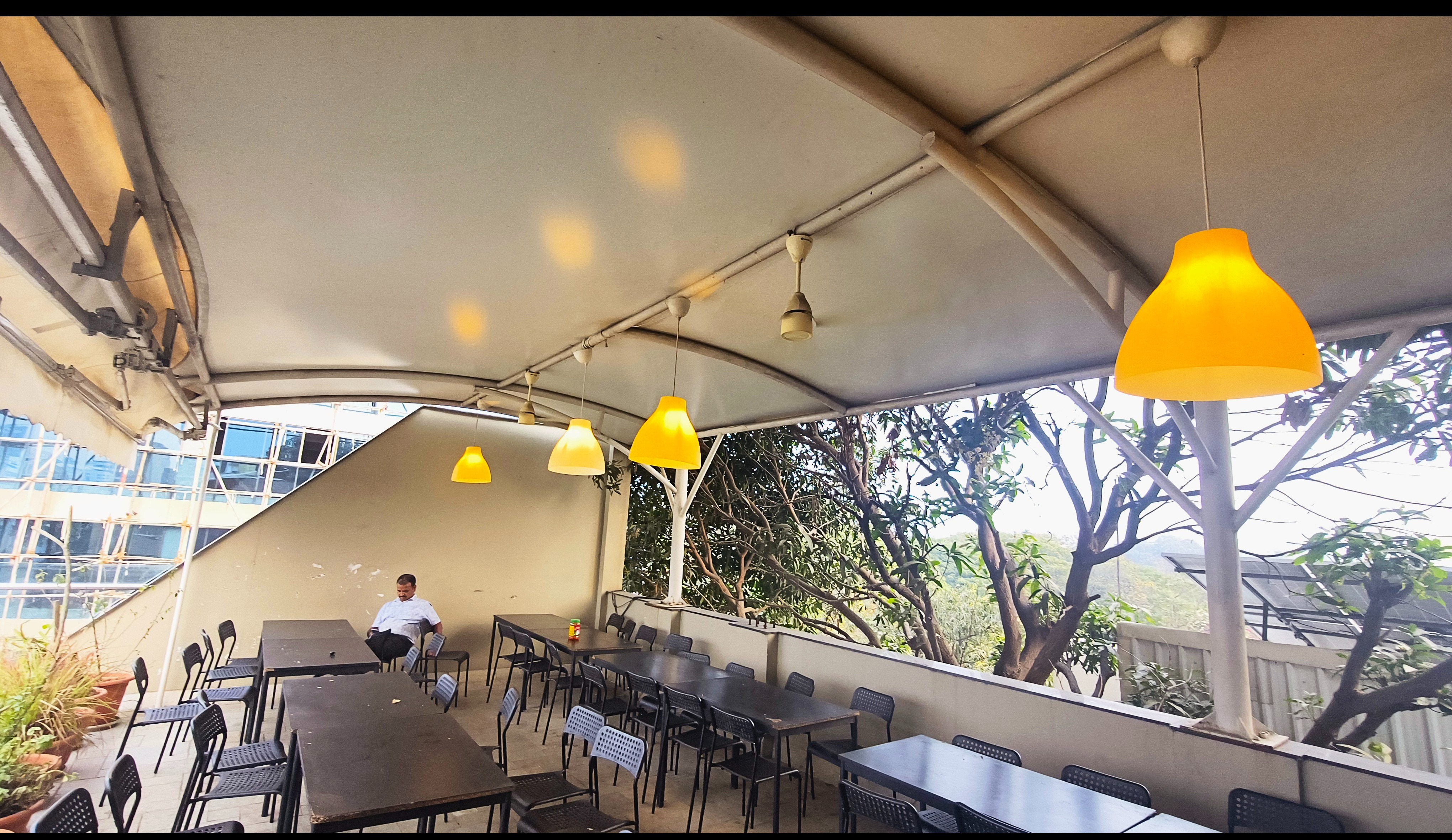
That concern is completely valid. A tensile membrane roof looks effortless once it’s up—a clean, sweeping fabric canopy floating over a massive workspace without a single interior pillar getting in the way of forklifts or crane movements. But that floating look is actually a carefully calculated balance of extreme tension and structural engineering.
The fabric pulls hard on the steel framework, and the steel frame pulls right back. If those forces aren't calculated down to the millimeter, bad weather won't just cause a minor leak—it can compromise the entire structure.
That is precisely why we never slice corners when it comes to tensile structural drawing Raipur projects.
Why the Paperwork Determines the Lifespan
When people ask us about our process at FV INFRA LLP, they often assume the magic happens when the fabric gets stretched on site. In reality, the critical work happens much earlier, right on the drawing board.
Before a single piece of tubular steel is cut or welded, our engineering team builds a complete digital replica. We factor in the specific soil bearing capacity at the Raipur site, the exact wind dynamics of the open terrain, and the sheer volume of water that hits Central India during peak monsoon months.
A proper blueprint answers the questions that keep plant managers awake at night:
How will the anchor bolts hold up when the fabric experiences uplift during high wind loads?
What is the exact angle needed to ensure rainwater drains off immediately instead of pooling in the middle of the membrane?
How does the tension distribute across the primary arches so the steel frame doesn't twist over time?
Without detailed structural drawings, a project is basically running on guesswork. And when you are covering thousands of square feet of active manufacturing space or high-value inventory, guesswork isn't an option.
From Initial Site Inspection to Final Installation
We've learned over the years across projects in Nagpur, Jabalpur, Bilaspur, and Bhilai that an end-to-end approach is the only way to guarantee structural integrity. If one team does the design, another supplies the steel, and a third crew handles installation, things get lost in translation.
Our workflow keeps everything under one roof:
Site Visit & Ground Analysis: We inspect the physical layout, checking ground level variations, access points, and surrounding structures that might affect wind flow.
3D Design & Visuals: Before engineering, we create a 3D model so you can visualize the exact shape, height, and coverage of your custom tensile design.
Precision Structural Drawing: This is the engineering core. We calculate steel pipe wall thickness, weld specs, cable tensions, and foundation depth suited to local soil conditions.
In-House Fabrication & Supply: We use high-strength structural steel and premium architectural membranes (like high-GSM PVC) designed to block UV radiation and reflect solar heat.
On-Site Erection: Because every beam and plate is prefabricated according to strict drawings, on-site assembly is quick, clean, and minimizes disruption to your daily factory operations.
Built for Chhattisgarh’s Harsh Climate
Industrial spaces in the Nagpur-Raipur belt face tough conditions. Summers bring scorching heat above 45°C, followed immediately by heavy, corrosive monsoon rain.
A well-engineered tensile structure handles both effortlessly. The membrane reflects solar heat, keeping the workspace beneath noticeably cooler without burning electricity on extra ventilation. When the rains hit, the high tension and smooth surface shed water instantly, preventing rust and long-term water damage.
Investing in professional roofing engineering services isn't just about passing building inspections—it's about peace of mind. Knowing that your clear-span factory shed was custom-engineered specifically for your site conditions means you don't have to worry when the storm clouds roll in over Raipur.
Whether you are expanding a factory yard, upgrading an industrial warehouse, or planning a commercial shade cover, starting with a rock-solid structural plan makes all the difference.