
I was standing in a school courtyard in Nagpur last July, right in the middle of a sudden monsoon downpour. You know that specific sound—the heavy, rhythmic drumming of rain on a traditional tin roof? It’s deafening. But more than the noise, what struck me was the sight of fifty kids huddled under a narrow concrete corridor, staring longingly at a playground that was quickly turning into a swamp.
It’s a scene we see too often across Maharashtra and Madhya Pradesh. Schools invest so much in their curriculum, but the playground—the heart of a child’s day—is usually at the mercy of the weather. That’s why at FV INFRA LLP, we’ve been having some really heartfelt conversations with school directors from Nagpur to Rewa about rethinking the humble school playground shed Nagpur parents are starting to look for.
Why Concrete and Metal are Retiring
For years, the go-to was a heavy concrete slab or a clunky metal roof. But let’s be honest: in an earthquake-prone world, or even just considering the intense heat of an Akola or Chandrapur summer, those heavy materials are starting to feel a bit outdated.
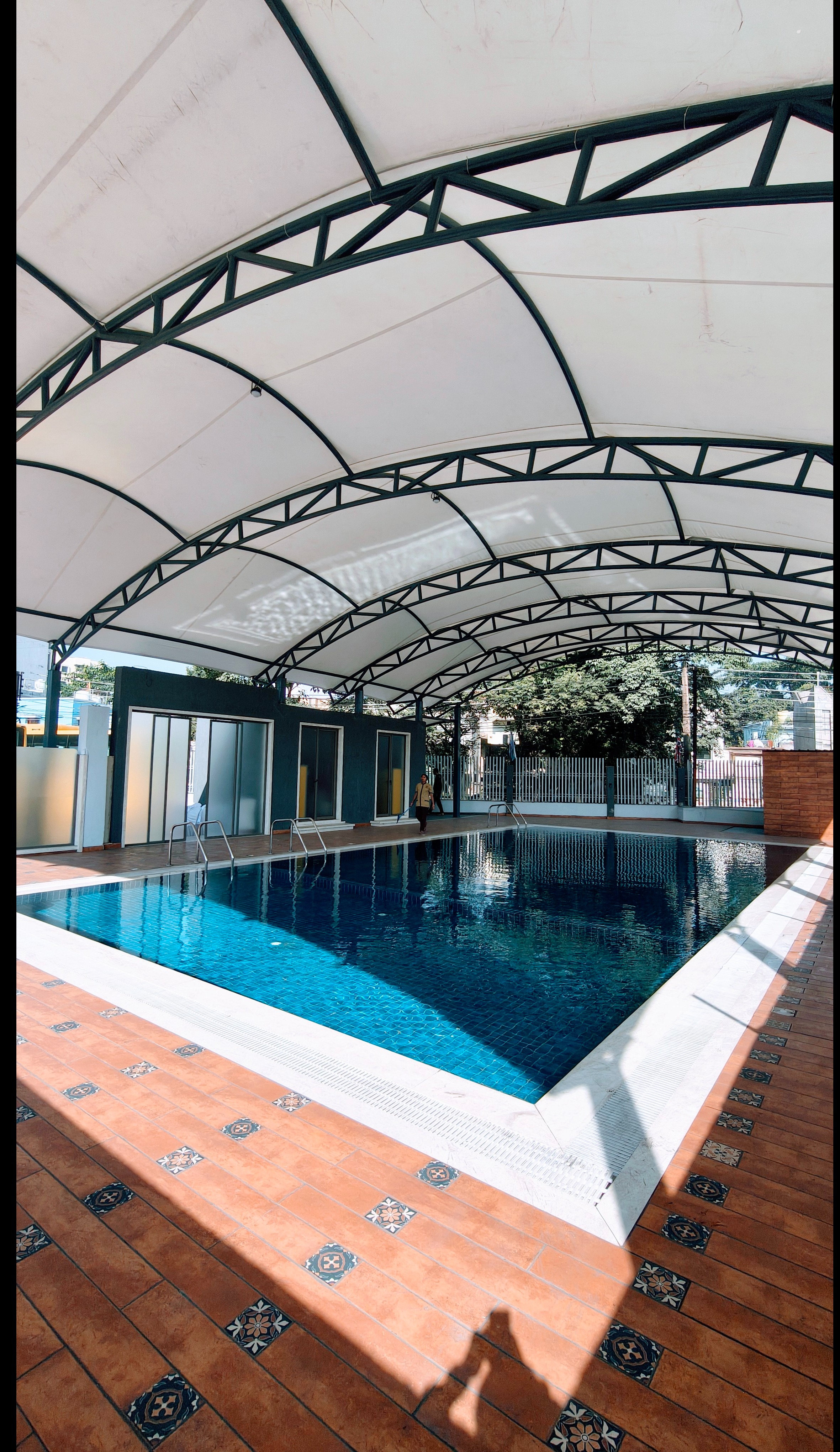
We’ve started installing tensile structure for schools because they solve the two biggest problems in our region: heat and safety.
The "Cool" Factor: Unlike metal, which turns into a giant radiator, the PVC and PTFE membranes we use reflect solar heat. It can be 45°C in Jabalpur or Raipur, but underneath that fabric, it feels like a different world.
Safety First: These structures are incredibly lightweight. Because they rely on continuous tension rather than massive, heavy internal pillars, you get a "clear-span" area. No pillars for kids to run into during a game of tag. Knowing a child is playing under a flexible, earthquake-safe membrane rather than tons of overhead concrete? Honestly, that’s the kind of peace of mind that helps our team sleep at night.
The "Glow" of a Weather-Proof Play Area
One thing people don't realize until they see it is the light. A traditional shed makes a playground dark and gloomy. A tensile membrane is naturally translucent. It filters the harsh sun into a soft, diffused glow. It’s like being in a giant, air-cooled lightbox.
We recently finished a project in Amravati where the principal told us the kids call the new area their "indoor-outdoor" park. Even during a heavy monsoon splash, they’re out there. The water just slides off the smooth, self-cleaning surface and disappears into the drainage we’ve designed. It’s a weather-proof play area that actually works 365 days a year.
From 3D Design to "Ready to Play"
We don't just "sell a tent." We’re a full-service team. Whether you’re in Gondia, Bhandara, or way out in Rewa, we start with a proper site visit. We look at the wind loads, the sun angles, and the kids' foot traffic. Our team handles the 3D designing and the technical structural drawings so you know exactly what the "freedom of form"—those cool curves and waves—will look like on your campus.
Seeing a project go from a messy, sun-baked plot to a modern, iconic structure in just a few days of on-site installation is always a rush for us. We’ve been lucky enough to work in Bhilai, Bilaspur, Durg, and Rajnandgaon, and every single time, the reaction is the same: the school feels upgraded instantly.
If you’re a school administrator in the Nagpur-Rewa belt and you're tired of seeing your playground empty half the year, let’s talk. We’ve probably worked in a town near you—Yavatmal, Balaghat, or even Titlagarh—and we’d love to show you how a bit of tensioned fabric can change a school’s entire energy.