I was standing in an industrial yard near Bhilai last month during a pre-monsoon shower, and honestly, I could barely hear the site supervisor standing two feet away from me. The sound of rain hitting the existing corrugated metal roof was like a machine gun. He had to scream just to tell me about their inventory.
That’s the reality for a lot of businesses in the Nagpur-Bhilai industrial belt. We build these massive steel sheds because that’s how it’s always been done, but then we spend years dealing with the "industrial headache": the deafening noise, the stifling heat, and that inevitable orange creep of rust.
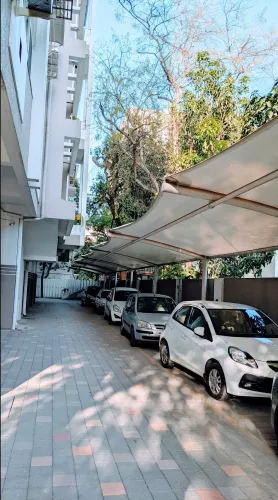
At FV INFRA LLP, we’ve been seeing a significant shift lately. More factory owners and warehouse managers are looking for a real industrial shed alternative Bhilai weather won't destroy in five years. They’re moving toward tensile membrane roofing, and once you see the difference on-site, it’s pretty hard to go back to metal.
The Rust Problem: Why Metal Fails in Chhattisgarh Humidity
If you run an industry in Bhilai, you know the humidity isn't just uncomfortable—it’s expensive. Traditional metal roofing, even the galvanized stuff, eventually loses the battle against industrial emissions and moisture. Once a tiny scratch appears, the rust starts.
When we talk about rust-proof industrial roofing, tensile fabric is the undisputed heavyweight.
Zero Corrosion: The high-strength PVC or PTFE membranes we use are chemically inert. They don't oxidize. They don't peel.
The "Cool" Factor: Metal sheds turn into ovens by 11:00 AM. Tensile membranes reflect solar heat and block 100% of UV rays, which keeps the floor temperature significantly lower. It’s a bioclimatic fix that actually makes the workspace breathable for the people inside.
Silence is a Safety Feature
Some projects just stick with you because of the "before and after" feel. We recently handled a project in Raipur where they replaced a section of old metal roofing with a tensile canopy. The first time it rained, the manager called me just to say he could finally hear the forklift signals over the rain.
In the metal roofing vs tensile debate, people often forget about acoustics. Tensile fabric absorbs the impact of rain rather than amplifying it. For a busy industrial site, that reduction in decibels isn't just a luxury—it’s a safety improvement.
From Design to 100% Watertight Reality
What allows our team to sleep at night is knowing we handle the entire journey. We don’t just drop off rolls of fabric. Our process in places like Durg, Rajnandgaon, and Bilaspur is end-to-end:
The Site Visit: We check your existing load-bearing capacity.
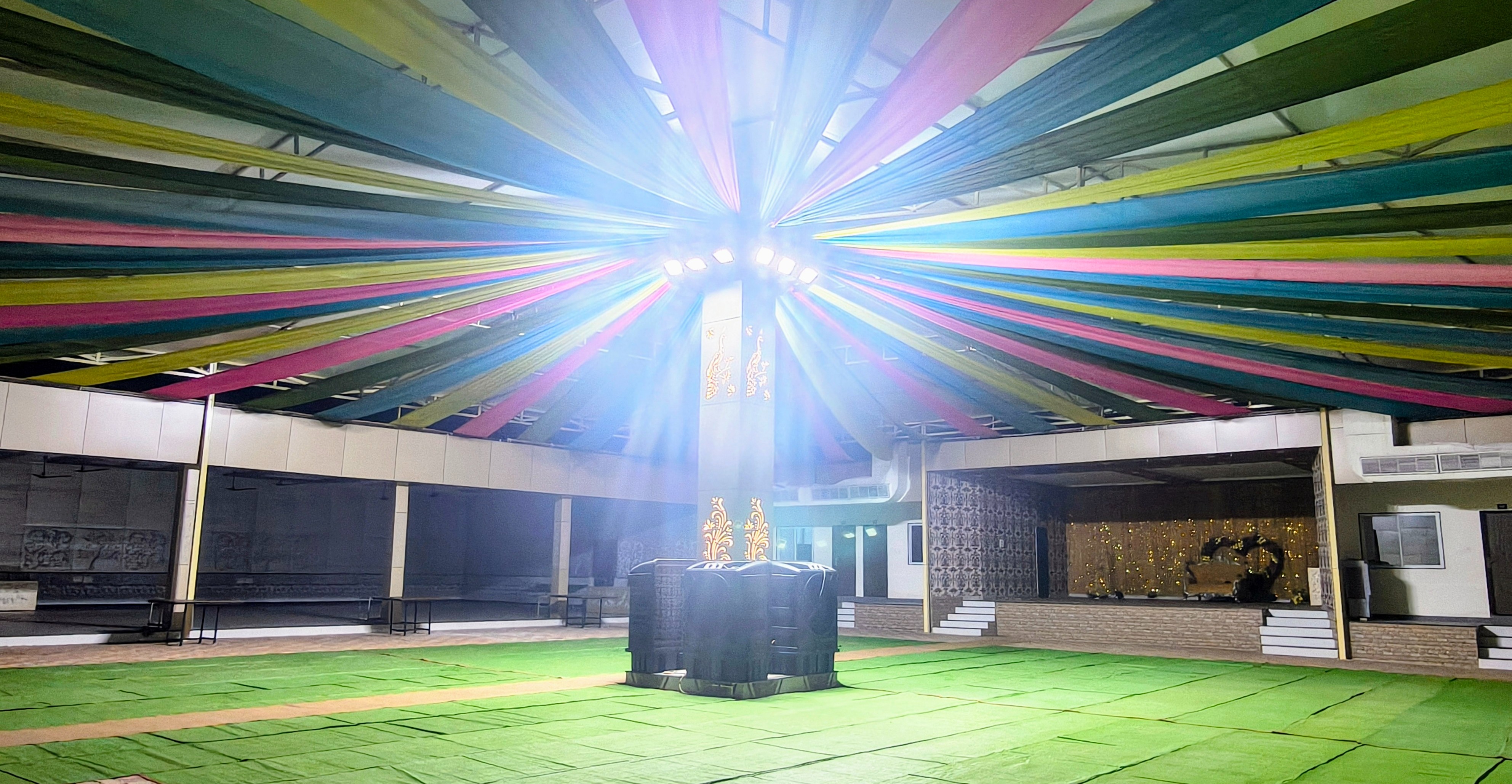
The 3D Vision: Our 3D designing shows you the "Freedom of Form"—curved shapes that allow for massive, clear-span coverage without those annoying internal pillars that get in the way of machinery.
The Installation: Because the components are prefabricated, the on-site work is fast and incredibly clean. We’re usually in and out in a few days, not weeks.
We’ve successfully finished projects all over—Jabalpur, Akola, Amravati, and even out in Titlagarh and Kesinga. Whether it's a tensile toll plaza or a massive industrial warehouse, the goal is the same: a roof that stays vibrant and taut for 20+ years.
If you’re sitting in an office in Bhilai right now listening to your roof rattle or watching the rust spots grow, it might be time to rethink the structure.