
When a severe cyclonic storm barrels across the Bay of Bengal toward coastal Odisha, the clock doesn't just tick—it hammers. I’ve spent years working with structural steel and high-tension fabrics across Central India, but nothing tests an engineering team quite like a distress call from a cyclone hit zone.
A couple of seasons back, right after a major storm surge wiped out local power lines and compromised regional health centers in a coastal district, we got an urgent query: “How fast can you get a 100% watertight, wind-resilient medical triage tent set up on coastal soil?”
In disaster scenarios, traditional masonry or concrete construction isn't even an option. Waiting weeks for brickwork to cure or heavy iron trusses to be welded on-site means vulnerable displaced families stay exposed to relentless rains and harsh elements. You need a secure, stable roof overhead, and you need it almost instantly.
That challenge is precisely why our engineering focus shifted toward pre-engineered, high-speed emergency shelter Odisha deployments.
Why Pre-Engineered Tensile Structures Outperform Traditional Tents
When people hear "temporary shelter," they usually think of basic canvas camping gear or loose tarps tied to bamboo poles. In a coastal disaster zone, those flimsy setups get torn to shreds within hours by gusting winds.
An industrial disaster relief tensile structure operates on a completely different engineering level:
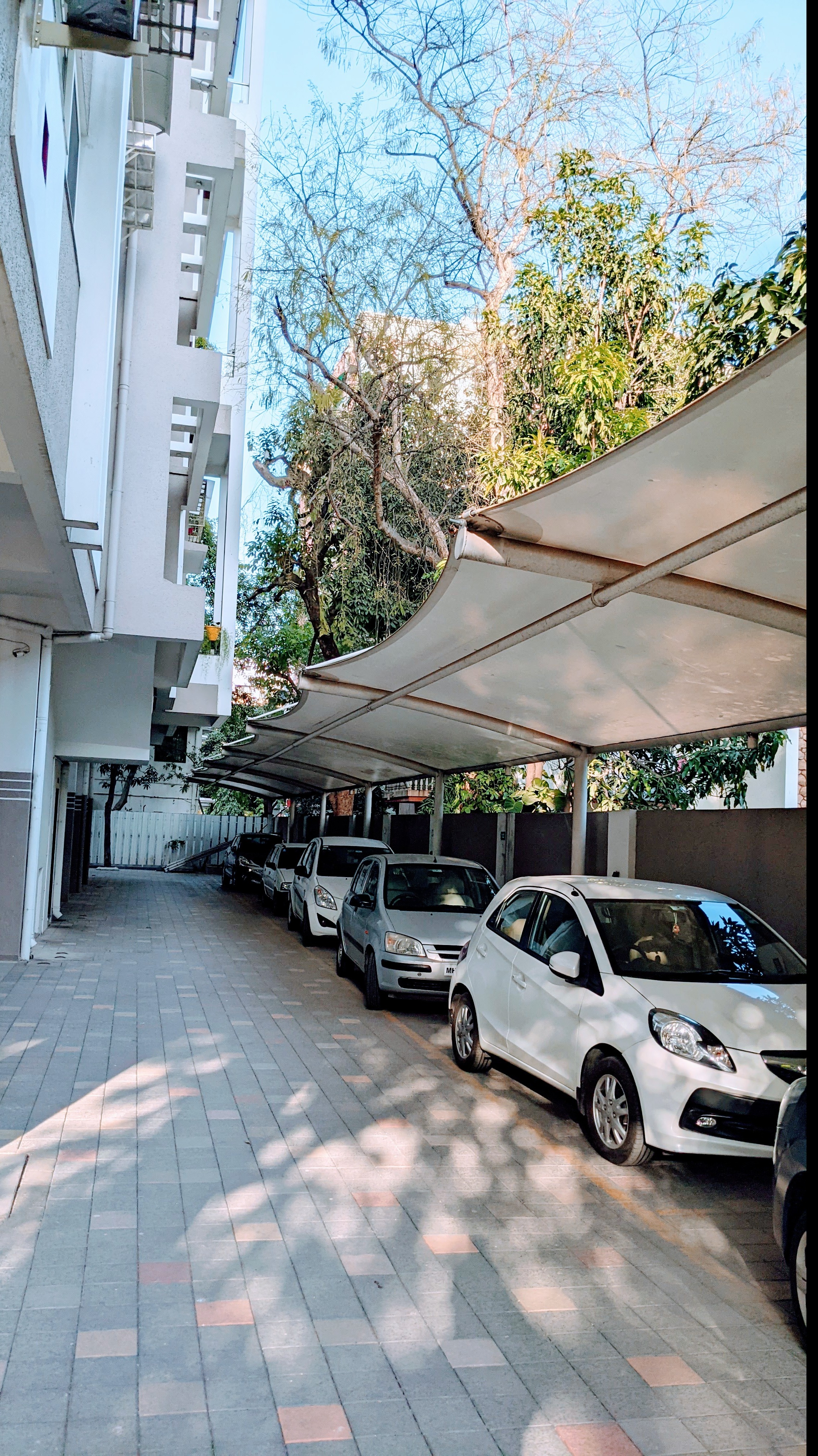
Continuous Tension Engineering: Instead of heavy, dangerous internal pillars that can collapse during tremor aftershocks, these structures rely on high-strength, flexible PVC or PTFE membranes stretched taut over lightweight steel frames. It creates a massive, clear-span covered space with zero internal obstructions—perfect for setting up emergency hospital beds, triage units, or food distribution centers.
100% Watertight & Cyclone-Resistant: The architectural membranes are intrinsically non-porous, hydrophobic, and engineered to withstand extreme wind loads. Water simply sheets off the curved canopy without pooling or causing roof collapses during heavy monsoon downpours.
The Bioclimatic Cooling Advantage: After a storm passes, coastal humidity and heat become unbearable. The membrane reflects solar radiation and blocks 100% of UV rays, keeping the interior ambient temperature significantly cooler for patients and relief workers without requiring heavy air conditioning grids.
The 72-Hour Deployment Timeline: How We Move
The secret to true rapid construction roofing isn't rushing the work on-site—it's eliminating on-site fabrication entirely.
Because FV INFRA LLP manages complete end-to-end service, we maintain pre-engineered modular structural drawings and standardized component inventories. When an urgent shelter requirement comes in from eastern Maharashtra, Chhattisgarh, or coastal Odisha, we bypass messy construction delays:
Built for Long-Term Resilience Across Central India
While these rapid-deployment structures are designed to go up in days during an emergency, they are built with materials that easily last 15 to 30 years. Once the initial disaster relief phase passes, community trusts and local authorities can repurpose these shelters into permanent school halls, vocational training centers, or covered markets.
Our specialized engineering crews handle complete site inspections, custom 3D designs, structural calculations, material supply, and site installations across our primary service areas in East Maharashtra, Madhya Pradesh, Odisha, Chhattisgarh, Telangana, and Rajasthan.
We take every project personally, bringing that same obsessive commitment to structural safety whether we are deploying emergency spans along the Odisha coast, or installing long-life commercial sheds in Nagpur, Raipur, Jabalpur, Akola, Amravati, Yavatmal, Bhandara, Gondia, Balaghat, Bilaspur, Bhilai, Durg, Rajnandgaon, Ambikapur, Titlagarh, Kesinga, Kantabanji, Gadchiroli, and Chandrapur.
When lives depend on immediate protection, you cannot afford structural failure or construction delays. By leveraging pre-engineered, high-tension fabric architecture, we can turn an exposed field into a safe, watertight sanctuary in just a few days.