I remember standing on a site near Bikaner last summer. It was one of those afternoons where the heat doesn't just feel hot—it feels heavy. I was talking to a client who wanted to cover a massive courtyard for his heritage hotel. He looked at the shimmering horizon and asked me point-blank, "In ten years, is this roof going to be a liability or an asset?"
It’s a question that keeps us on our toes at FV INFRA LLP. When you’re building in the Nagpur-Rajasthan belt, you aren't just fighting rain; you’re fighting UV rays that can eat through standard materials like they're nothing. If you’re a high-end buyer looking for a durable roofing material, you’ve likely bumped into the big debate: PVC vs PTFE tensile membranes.
The Reliable Workhorse: PVC
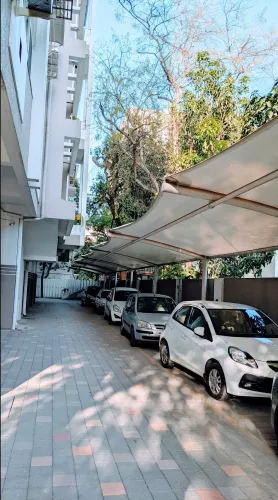
For many of our projects in places like Nagpur, Raipur, or Bhilai, PVC is the go-to. It’s flexible, looks incredibly sharp, and can be translucent enough to give you that beautiful "glow" at night.
In the Rajasthan desert, a high-quality PVC membrane usually gives you a solid 15-year life. It’s a fantastic, cost-effective way to get a clear-span area without a single pillar blocking your view. However, the desert is a different beast. The intense thermal cycling—boiling days followed by chilly desert nights—eventually takes its toll on the plasticizers in the fabric. It’s great for a decade and a half, but if you’re looking at a multi-generational legacy project, you might want to look at the "gold standard."
The 30-Year Legend: PTFE
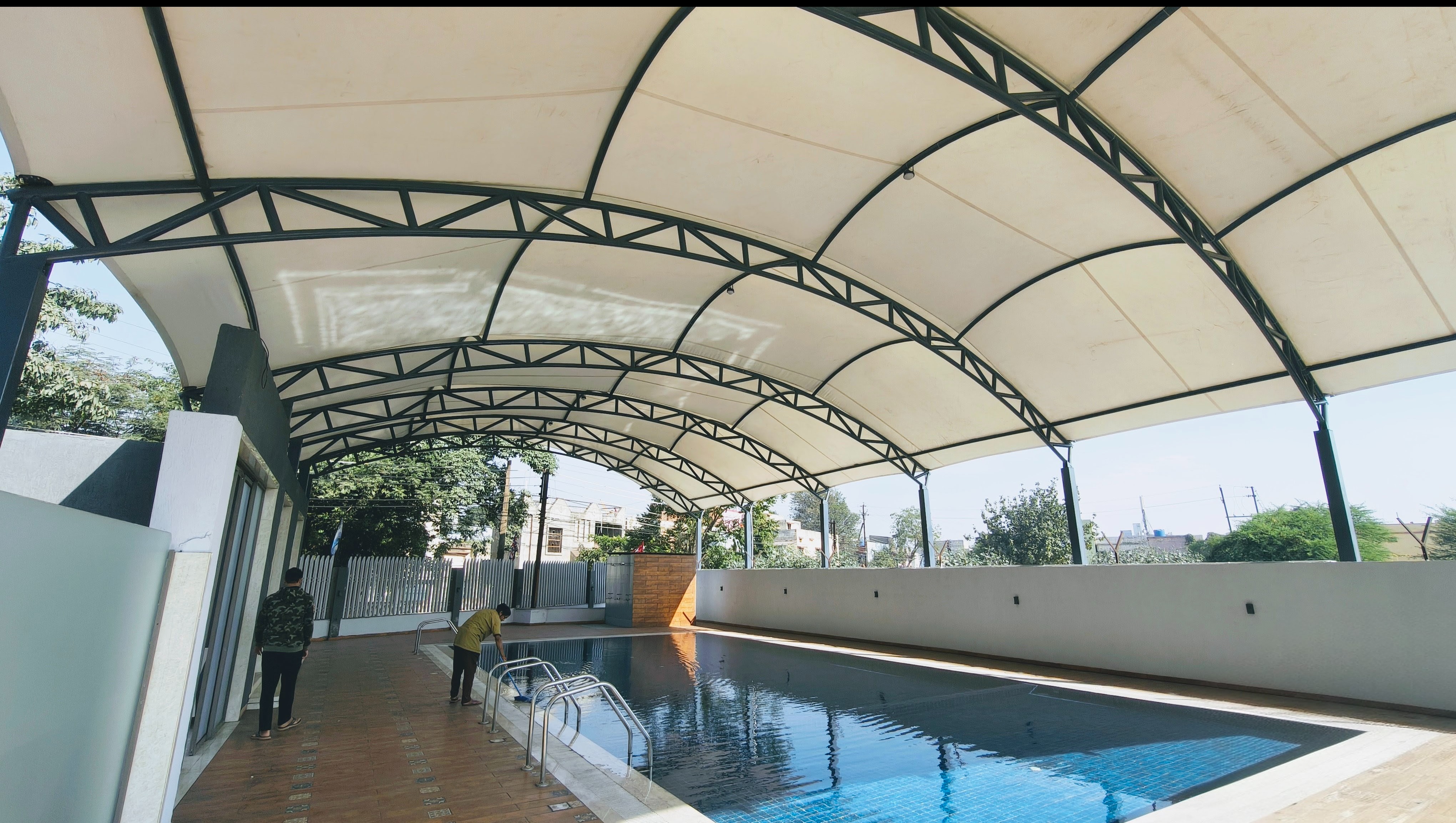
If PVC is the reliable sedan, then PTFE is the armored tank that looks like a sail. This is a glass-fiber base coated in Teflon. In the world of PTFE membrane Rajasthan applications, this stuff is legendary. It’s essentially immune to UV degradation. It doesn’t yellow, it doesn't get brittle, and it actually bleaches whiter under the sun over time.
I’ve seen PTFE structures that have been standing for 25 years and still look like they were installed last week. For iconic resorts in Jaisalmer or Jodhpur, this is the "set it and forget it" solution. You’re looking at a 30-year lifespan. It’s also practically non-combustible, which is a huge peace of mind for commercial institutions. Knowing we've installed something that will outlast most of the cars in the parking lot? That’s what allows our team to sleep at night.
Why the Choice Matters for Your Site
Whether we’re working in Jabalpur, Amravati, or Yavatmal, we don't just "sell a shed." We look at the wind loads and the specific sun path of your property.
Maintenance: Both are self-cleaning (thanks to those slick top-coats), but PTFE is the undisputed king of repelling dust and soot.
Installation: Both involve our "dry process." We do the 3D designing and structural drawings at our end, then show up and install in a matter of days. No cement mess, no brick-and-mortar headaches.
The "Feel": PVC offers a bit more "freedom of form" for wild, curvy designs. PTFE is stiffer but carries a regal, permanent architectural weight.
A Personal Commitment from Nagpur to the Desert
We’ve carried our tools to Balaghat, Gondia, and even way out to Titlagarh and Kesinga. Every time we're in Rajasthan, the stakes feel a bit higher because the climate is so unforgiving. We take the site visit and inspection very personally—it’s not just about a contract; it’s about making sure that five years from now, when the dust is blowing and the sun is at 48°C, you’re sitting comfortably in the shade, glad you made the right call.
We've completed plenty of projects in Akola, Chandrapur, and Gadchiroli, but the desert taught us that the material is only half the story; the tensioning is the other half. Getting that "drum-tight" finish is what prevents the fabric from flapping and wearing out prematurely.
If you’re stuck between the 15-year efficiency of PVC or the 30-year legacy of PTFE for your property, let’s have a real conversation about it.